

How Can High Blood Pressure Be Treated? From Home Remedies to Medications + Video
Managing high blood pressure is crucial for individuals affected by this condition, as untreated hypertension can lead to serious complications such as heart fa...

April 7 of each year marks the celebration of World Health Day. From its inception at the First Health Assembly in 1948 and since taking effect in 1950, the celebration has aimed to create awareness of a specific health theme to highlight a priority area of concern for the World Health Organization.
Over the past 50 years this has brought to light important health issues such as mental health, maternal and child care, and climate change.
As COVID-19 has highlighted, some people are able to live healthier lives and have better access to health services than others – entirely due to the conditions in which they are born, grow, live, work and age.
All over the world, some groups struggle to make ends meet with little daily income, have poorer housing conditions and education, fewer employment opportunities, experience greater gender inequality, and have little or no access to safe environments, clean water and air, food security and health services. This leads to unnecessary suffering, avoidable illness, and premature death. And it harms our societies and economies.
This is not only unfair: it is preventable. That’s why we are calling on leaders to ensure that everyone has living and working conditions that are conducive to good health. At the same time we urge leaders to monitor health inequities, and to ensure that all people are able to access quality health services when and where they need them.
COVID-19 has hit all countries hard, but its impact has been harshest on those communities which were already vulnerable, who are more exposed to the disease, less likely to have access to quality health care services and more likely to experience adverse consequences as a result of measures implemented to contain the pandemic.
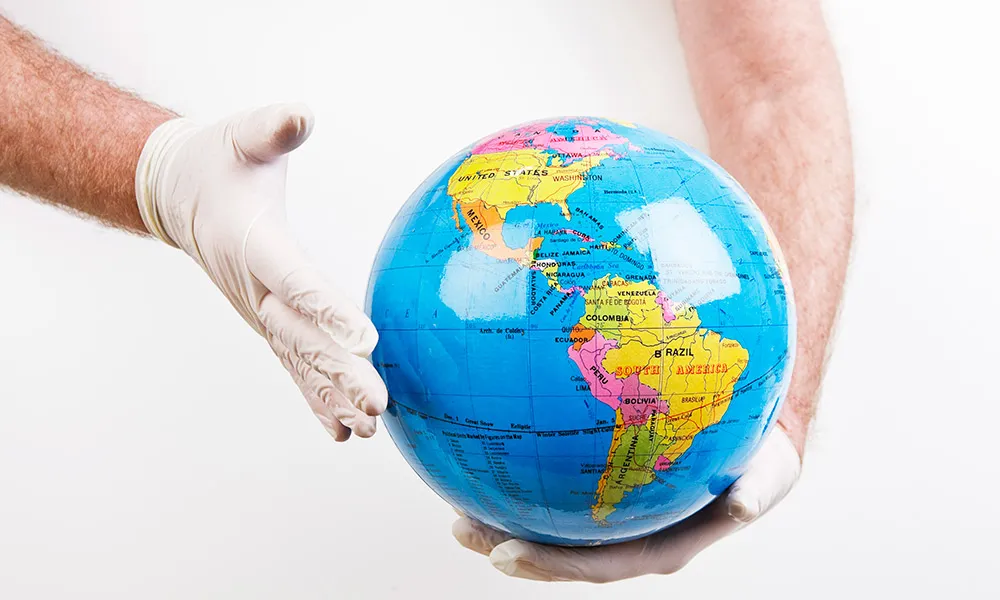
This World Health Day, we’re calling for action to eliminate health inequities, as part of a year-long global campaign to bring people together to build a fairer, healthier world. The campaign highlights WHO’s constitutional principle that “the enjoyment of the highest attainable standard of health is one of the fundamental rights of every human being without distinction of race, religion, political belief, economic or social condition.”
Facts and Figures:
Prepared : Negin Ghafouri – Biomedical Engineering Student
Source : www.who.int

Managing high blood pressure is crucial for individuals affected by this condition, as untreated hypertension can lead to serious complications such as heart fa...

Symptoms, issues, and treatment methods Osteoporosis, also referred to as “bone fragility” or “bone density loss,” is a medical condition characterized by weake...
A peptic ulcer is an open sore or sores in the layers of the stomach or the initial part of the small intestine. These ulcers can occur in the stomach (gastric...
Answers are AI-generated from this website’s content only and are not medical advice.