

How can high blood pressure be treated? From home remedies to medications + video
Managing high blood pressure is crucial for individuals affected by this condition, as untreated hypertension can lead to serious complications such as heart fa...

Vaccines can be divided into a number of different types,but ultimately work on the same principle. This is to stimulate the immune response to recognise a pathogen (a disease-causing organism) or part of a pathogen. Once the immune system has been trained to recognise this,if the body is later exposed to the pathogen, it will be removed from the body. Specifically, the immune system recognises foreign ‘antigens’, parts of the pathogen on the surface or inside the pathogen, that are not normally found in the body.
The oldest and most well-known method of vaccination is to use the whole disease-causing pathogen in a vaccine to produce an immune response similar to that seen during natural infection. Using the pathogen in its natural state would cause active disease and could potentially be dangerous to the individual receiving it and risk the disease spreading to others. To avoid this, modern vaccines use pathogens that have been altered.
Live attenuated VaccinesLive attenuated vaccines contain whole bacteria or viruses which have been “weakened”(attenuated) so that they create a protective immune response but do not cause disease in healthy people. For most modern vaccines this “weakening” is achieved through genetic modification of the pathogen either as a naturally occurring phenomenon or as a modification specifically introduced by scientists.
Live vaccines tend to create a strong and lasting immune response and include some of our best vaccines. However, live vaccines may not suitable for people whose immune system doesn’t work, either due to drug treatment or underlying illness. This is because the weakened viruses or bacteria could in some cases multiply too much and might cause disease in these people.
Live attenuated vaccinesInactivated vaccines contain whole bacteria or viruses which have been killed or have been altered, so that they cannot replicate. Because inactivated vaccines do not contain any live bacteria or viruses, they cannot cause the diseases against which they protect, even in people with severely weakened immune systems. However, inactivated vaccines do not always create such a strong or long-lasting immune response as live attenuated vaccines.
‘Whole killed’ vaccinesSubunit vaccines do not always create such a strong or long-lasting immune response as live attenuated vaccines. They usually require repeated doses initially and subsequent booster doses in subsequent years. Adjuvants are often added to subunit vaccines. These are substances which help to strengthen and lengthen the immune response to the vaccine. As a result, common local reactions (such as a sore arm) may be more noticeable and frequent with these types of vaccines.
Recombinant vaccines are made using bacterial or yeast cells to manufacture the vaccine. A small piece of DNA is taken from the virus or bacterium against which we want to protect and inserted into the manufacturing cells.
Some bacteria release toxins (poisonous proteins) when they attack the body, and it is the toxins rather than the bacteria itself that we want to be protected against. The immune system recognises these toxins in the same way that it recognises other antigens on the surface of the bacteria, and is able to mount an immune response to them. Some vaccines are made with inactivated versions of these toxins.
Virus-like particles (VLPs) are molecules that closely resemble viruses, but are non-infectious because they contain no viral genetic material. They can be naturally occurring or synthesized through the individual expression of viral structural proteins, which can then self-assemble into the virus-like structure. In some cases, the antigens in a VLP vaccine are the viral structural proteins themselves. Alternatively, the VLPs can be manufactured to present antigens from another pathogen on the surface, or even multiple pathogens at once. As each VLP has multiple copies of an antigen on its surface it is more effective at stimulating an immune response that a single copy. In some cases, the structural proteins of the VLP can act as adjuvants, helping to strengthen the immune response to the primary target antigen.
A handful of VLP-based vaccines are currently used worldwide:
RNA vaccines use mRNA (messenger RNA) inside a lipid (fat) membrane. This fatty cover both protects the mRNA when it first enters the body, and also helps it to get inside cells by fusing with the cell membrane. Once the mRNA is inside the cell, machinery inside the cell translates it into the antigen protein. This mRNA typically lasts a few days, but in that time sufficient antigen is made to stimulate an immune response. It is then naturally broken down and removed by the body. RNA vaccines are not capable of combining with the human genetic code (DNA).
There are two RNA vaccines authorized for emergency use at present. The Pfizer BioNTech and the Moderna COVID-19 vaccines are both RNA vaccines.
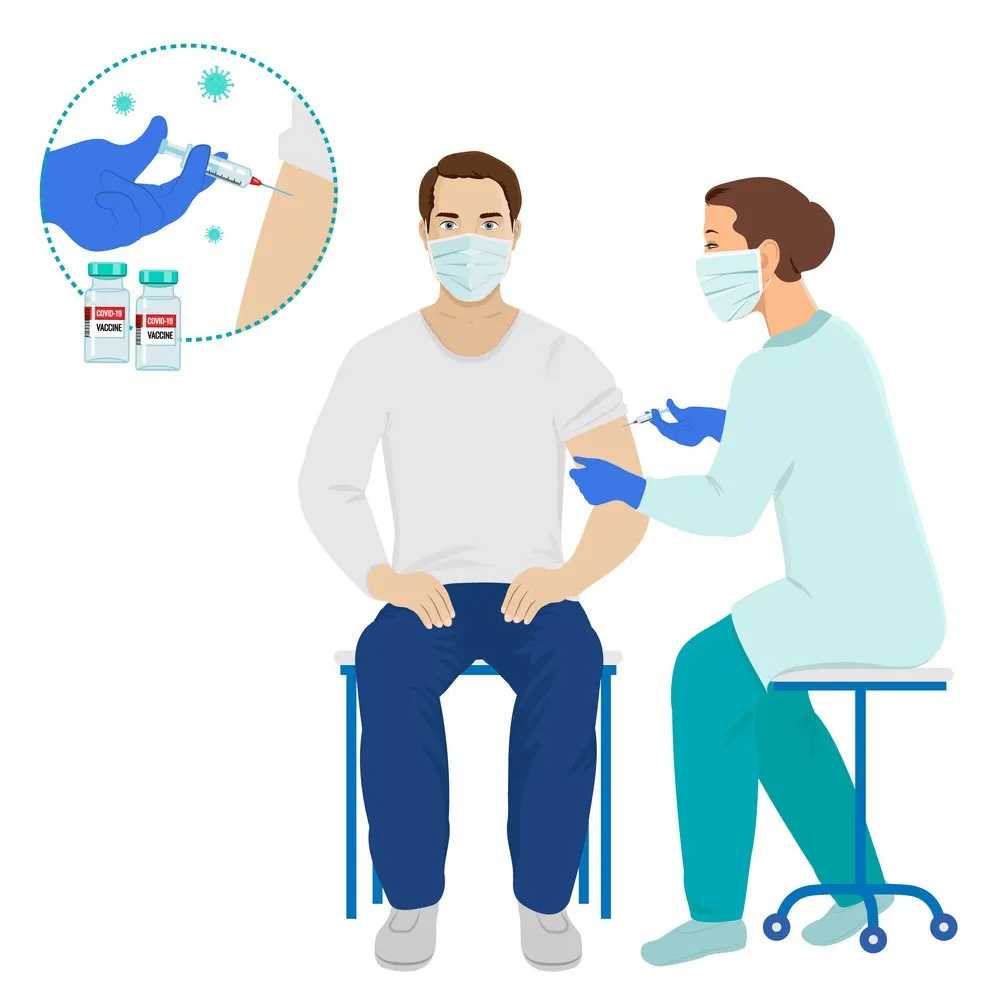
DNA is more stable than mRNA so doesn’t require the same initial protection. DNA vaccines are typically administered along with a technique called electroporation. This uses low level electronic waves to allow the bodies’ cells to take up the DNA vaccine. DNA must be translated to mRNA within the cell nucleus before it can subsequently be translated to protein antigens which stimulate an immune response.
There are currently no licenced DNA vaccines, but there are many in development.
Prepared : Nikta Hosseini – Biomedical Engineering Student
Source : vk.ovg.ox.ac.uk

Managing high blood pressure is crucial for individuals affected by this condition, as untreated hypertension can lead to serious complications such as heart fa...

Symptoms, issues, and treatment methods Osteoporosis, also referred to as “bone fragility” or “bone density loss,” is a medical condition characterized by weake...
A peptic ulcer is an open sore or sores in the layers of the stomach or the initial part of the small intestine. These ulcers can occur in the stomach (gastric...